
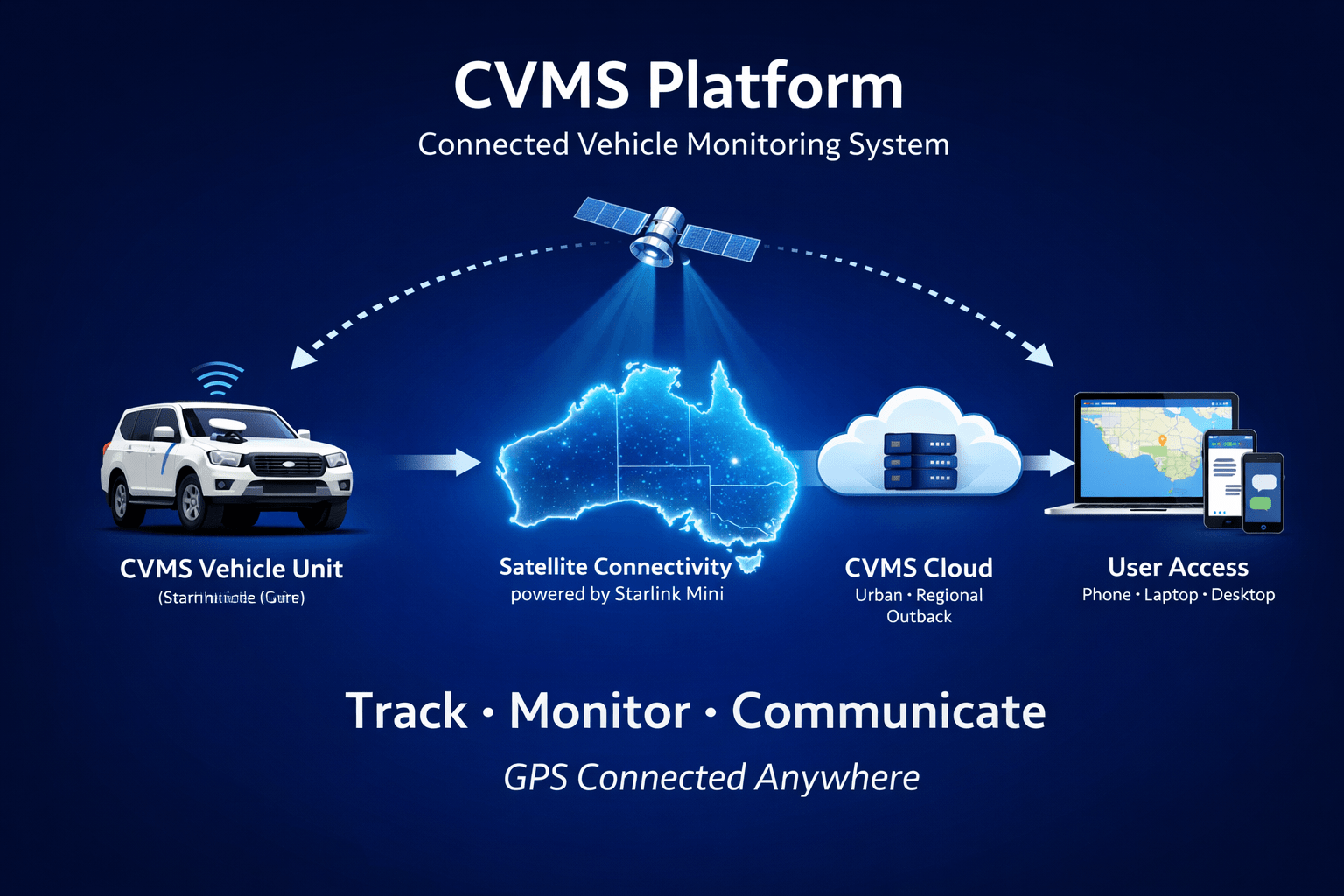
Australia’s transport and logistics sector moves more freight across more distance than almost any comparable industry in the world. From metropolitan last-mile delivery to long-haul interstate runs and remote outback freight routes, Australian transport operators face a unique combination of operational demands, regulatory requirements and geographic challenges.
Fleet tracking technology has evolved significantly over the past decade. Where GPS tracking once simply meant knowing where a vehicle was, modern connected fleet platforms deliver real-time visibility, driver monitoring, compliance documentation and communication — all from a single integrated system.
This article outlines what contemporary transport and logistics operations need from a fleet tracking solution, and how CVMS addresses those needs.
Real-Time Vehicle Location
The foundational requirement for any fleet tracking system is accurate, real-time GPS location. For transport and logistics operations, this means:
- Knowing the exact position of every vehicle at any given moment
- Monitoring progress against route and schedule
- Providing accurate ETAs to customers and receiving depots
- Responding quickly when a vehicle deviates from its planned route
CVMS delivers live GPS tracking with map visualisation accessible from any device — desktop, tablet or mobile. Trip history and route replay allow operations managers to review completed journeys in detail.
Coverage in Remote and Regional Areas
For long-haul transport operators, one of the most significant limitations of standard 4G GPS tracking is coverage drop-out on remote routes. The Great Northern Highway, the Stuart Highway, the Nullarbor, the Barkly — these are commercial freight arteries where mobile coverage is patchy at best and absent for long stretches.
CVMS addresses this through Starlink connectivity. The Starlink Mini unit installed in the vehicle provides satellite internet coverage across virtually all of Australia, meaning GPS data continues to be transmitted and dashcam video continues to stream even in zero mobile coverage areas.
For transport operators running freight to remote mine sites, stations or communities, this is the difference between operational visibility and a blind spot.
Dashcam and Video Monitoring
Video telematics has become a standard expectation for professional transport fleets. Forward-facing dashcam footage provides:
- Evidence in the event of an accident or near-miss
- Protection against false liability claims
- Driver coaching material for improving safety performance
- Documentation for insurance purposes
The CVMS AI Dashcam V3 provides both live streaming (viewable from base in real time) and recorded footage stored for later review. ADAS functionality adds automated detection of dangerous driving events including forward collision risk and lane departure.
Driver Behaviour Monitoring
Fuel costs, maintenance costs and insurance premiums are all directly affected by driver behaviour. Harsh braking, rapid acceleration, speeding and excessive idling add up to significant operational costs at scale.
CVMS monitors and records driver behaviour events automatically, providing operations managers with:
- Individual driver scorecards
- Fleet-wide behaviour trends
- Automated alerts for serious events
- Data to support driver coaching conversations
Compliance and Reporting
Transport operators in Australia operate under a range of compliance obligations including Chain of Responsibility (CoR) requirements, work and rest hour regulations and vehicle maintenance schedules. CVMS supports compliance through automated reporting that documents:
- Vehicle locations and routes
- Trip start and end times
- Speed events and driving behaviour
- Fatigue monitoring events
All data is stored and accessible for the purposes of compliance audits, incident investigations and regulatory reporting.
WhatsApp Communication via Starlink
For long-haul drivers on remote routes, communication with base has traditionally relied on UHF radio (limited range) or mobile phone (dependent on coverage). CVMS enables drivers to communicate with base via WhatsApp using the Starlink connection — from anywhere in Australia.
This means operations managers can speak directly with drivers without relying on mobile coverage, and drivers can report issues, request assistance or provide updates in real time, regardless of where they are on the route.
One System, One Monthly Cost
CVMS is available as a complete fleet kit — hardware, connectivity and platform — for $950 setup plus $120 per month per vehicle, with no lock-in contracts.
For transport and logistics operators, this represents a single predictable cost per vehicle that covers GPS tracking, dashcam monitoring, Starlink connectivity and driver safety monitoring — replacing what would otherwise require multiple separate systems and subscriptions.
For more information, visit www.gpstrackersaustralia.au or call 02 8764 0753.